

Strong markets have a way of changing the conversation.
After several consecutive years of strong equity returns and markets near all-time highs, it is perfectly natural to wonder how much longer this can continue.
Stocks have already gone up so much. Should we become more cautious? Is a correction overdue?
At the same time, another investor may look at those very same markets—along with the extraordinary excitement surrounding artificial intelligence and other areas of innovation—and ask an entirely different question:
Are we missing out? Should we be doing more?
And eventually, when the next significant market decline inevitably arrives, the question will change once again:
Should we get out?
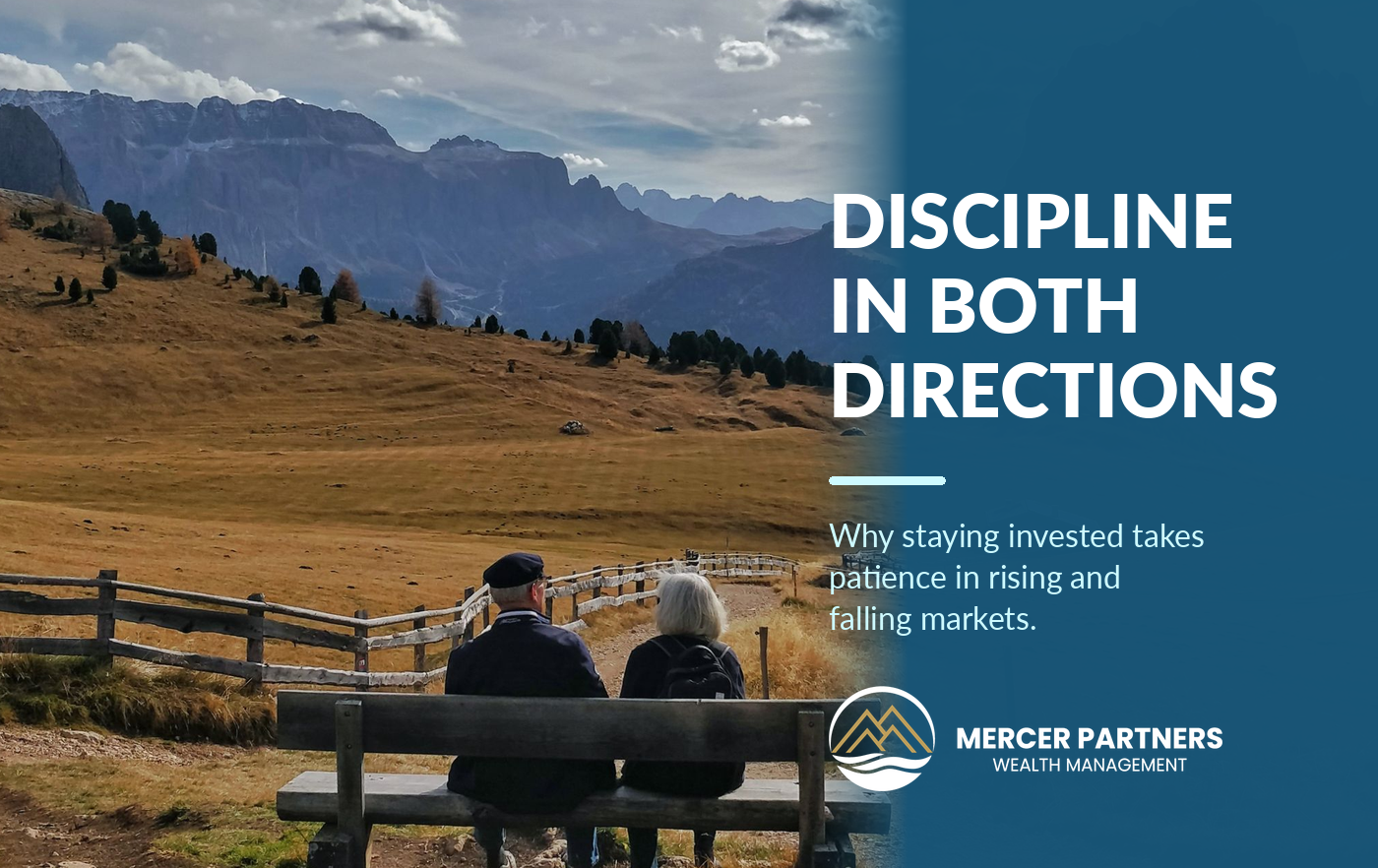
Discipline in Both Directions
These questions appear very different. Yet each present essentially the same challenge: the temptation to abandon a thoughtful long-term plan because of what the market has recently done—or what we believe it must do next.
That is why I believe successful investing requires discipline in both directions.
It is important to remember that all-time highs are a normal feature of a growing market, not necessarily a warning that a decline is imminent. Markets do not decline simply because they have risen substantially, nor do strong returns automatically make the next year a bad one. Corporate earnings, economic growth, innovation and productivity continue to evolve regardless of where an index happens to be relative to its previous high.
None of this means markets will simply continue higher indefinitely. They won’t.
Corrections, bear markets and recessions are permanent features of investing. We should expect them. What we cannot know is when they occur, what will cause them, or how long they will last.
And therein lies the problem with trying to become “more cautious” at precisely the right moment. Getting out is only half of the decision. You also must know when to get back in.
During market declines, discipline means resisting the urge to sell good investments simply because their prices have temporarily fallen. During strong markets, discipline means resisting the temptation to chase what has recently performed best—or becoming overly defensive simply because markets have already performed well.
Neither is easy.
The Investor’s Greatest Challenge
Human nature encourages us to become more optimistic as prices rise and more pessimistic as they fall. It can also convince us that after several good years, a bad year simply must be next. But markets don’t operate according to a calendar, and successful long-term investing rarely comes from correctly predicting the next turn.
This is where financial planning becomes so important.
Our process has always been Goals → Plan → Portfolio. We first determine what your money needs to accomplish. We build a financial plan around those objectives. Only then do we construct and manage the portfolio designed to fund that plan.
The order matters.
If your goals have not changed and your financial plan remains sound, an all-time high—or a significant market decline—does not necessarily require a new investment strategy. More often, it requires the patience and discipline to allow the existing strategy to work.
There will always be something compelling investors to act. Today it may be excitement about a new technology, concern that markets have risen too far, or simply the belief that after several strong years, the good times must soon end. Tomorrow it will be something else.
The Next Move
We can’t consistently predict the next 10% move in the market—up or down. Fortunately, we don’t need to.
Our focus is on participating in the long-term growth of great businesses, maintaining appropriate diversification, continually aligning your portfolio with your financial plan, and making thoughtful adjustments when your circumstances—not market emotion—call for them.
Over a lifetime of investing, markets will repeatedly test our patience in both directions. Sometimes they will make us afraid of losing money. Other times they will make us afraid of missing out. And occasionally, they will simply make us uncomfortable because things have been going too well.
The answer to each is remarkably similar: Goals. Plan. Portfolio. Discipline.
As always, we remain focused on what matters most and committed to helping you stay the course. Thank you for your continued confidence. It is a privilege to serve you and your family.
Best,
Nick
This material was created to provide accurate and reliable information on the subjects covered but should not be regarded as a complete analysis of these subjects. It is not intended to provide specific legal, tax or other professional advice. The services of an appropriate professional should be sought regarding your individual situation. Tracking: #1179460
Investing involves risk, including the potential loss of principal. No investment strategy can guarantee a profit or protect against loss in periods of declining values. There is no guarantee that a diversified portfolio will enhance overall returns or outperform a non-diversified portfolio. Diversification does not protect against market risk.